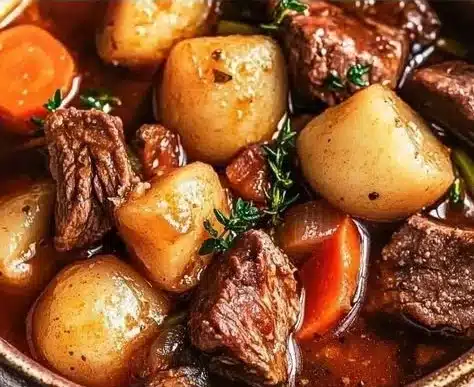
There’s a memory that always warms my heart, one that hovers over the kitchen like the rich aroma of a simmering pot. I can still see my grandmother, her hands skillfully stirring a large pot of Comforting Beef Stew, the aroma weaving its way through our cozy home in Asheville. I remember the way she would smile just as much as she tended to her beloved stew, coaxing the flavors out of each ingredient. The sizzle of beef meeting hot oil would wrap around me like a favorite blanket, filling me with a sense of home and nostalgia.
As the beef browned, she would add in the earthy vegetables, letting them soften and release their sweetness. I’d stand nearby, peeking over her shoulder, fascinated by how something so simple could become something so extraordinary with just a little love and patience. One taste of that stew was always enough to melt my troubles away, reminding me that comfort could be as simple as flavorful meat and fresh vegetables simmering together. It was during those moments that I found joy not just in the dish, but in cooking itself, carried in the constantly evolving traditions of family meals—a legacy I strive to continue in my own home.
As winter descends upon us, there’s nothing more inviting than a warm bowl of beef stew. It’s not just food; it’s solace during chilly evenings and the promise of laughter shared around the dinner table. Whether you’re hosting friends or enjoying a quiet night with family, this Comforting Beef Stew can bring everyone together, creating cherished moments with every spoonful.
Flavor and Popularity
The Unique Flavor Profile of Comforting Beef Stew
At the heart of every great Comforting Beef Stew lies a medley of rich flavors that work harmoniously together. The beef, when seared properly, develops a deep, savory crust that brings out umami notes—a flavor that leaves a memorable mark on your palate. As it simmers, the meat tenderizes and absorbs the essence of the broth, melding with the earthy characters of carrots, onions, and herbs like thyme and bay leaves.
Each ingredient contributes its own unique flair; the carrots lend a natural sweetness, while the onions and garlic add a delightful aromatic depth. Fresh herbs bring a burst of brightness, helping to elevate the dish and create layers of flavor. Whether you prefer a little splash of red wine or a sprinkle of Worcestershire sauce, these additions introduce a comforting richness that defines the dish.
Why This Recipe Is a Family Favorite and Crowd-Pleaser
What makes a recipe a true family favorite? I believe it’s the connection it creates between those gathered around the table. This Comforting Beef Stew could serve as our family’s culinary handshake—a way to invite more of the family together. It speaks to the heart, coaxing out memories shared over laughter and hearty conversation.
It’s a versatile dish, too—perfect for winter gatherings or cozy weeknights. Friends are often eager to lend a hand in the kitchen when they know this stew is on the menu. The anticipation of that first bite becomes a ritual in itself, filled with moments of joy and satisfaction. This is precisely why it has earned its place as one of our go-to comfort meals.
Ingredients and Preparation
Essential Ingredients and Possible Substitutions
To create your own Comforting Beef Stew, you’ll want to gather a few essential ingredients. Here’s a list to get you started:
- Beef: Look for a chuck roast or stew meat, which benefits from slow cooking to become tender and juicy. You could also substitute this with lamb if you’re feeling adventurous.
- Aromatics: Onions, garlic, and celery form a flavorful base.
- Vegetables: Carrots and potatoes add both texture and nutrition, but feel free to include others like parsnips or peas depending on what you have at hand.
- Broth: Beef broth serves as the heart of the stew. I love to use homemade broth, but store-bought works well too.
- Tomato paste: This adds depth and a hint of sweetness to balance the flavors.
- Herbs: Fresh thyme, parsley, and a bay leaf infuse the dish with freshness.
- Red wine: A good quality dry red wine enhances the stew’s richness; you can also use a splash of balsamic vinegar if wine isn’t on hand.
If any ingredients need a bit of tweaking, there’s no need to fret. Perhaps you want to skip the potatoes—go ahead! You can even swap out the vegetables based on your family’s tastes. The stew will adapt beautifully to whatever ingredients you have.
Step-by-Step Recipe Instructions with Tips
Sear the Beef: Begin by cutting the beef into bite-sized pieces and seasoning generously with salt and pepper. In a heavy-bottomed pot, heat some olive oil over medium-high heat and sear the meat until it’s nicely browned on all sides. Don’t overcrowd the pan! Doing this in batches helps achieve that beautiful caramelization.
Sauté Aromatics: Once the beef is browned, remove it from the pot and set it aside. In the same pot, add chopped onions, garlic, and celery, stirring until softened. The flavors that develop here are pivotal, so let them sauté just until they begin to caramelize.
Build the Stew: Stir in the tomato paste, cooking it for a minute or two until it deepens in color. Return the beef to the pot, adding in the carrots, potatoes, and any additional vegetables you desire. Pour in the beef broth and red wine, scraping up any browned bits from the bottom of the pot—these add incredible flavor.
Season and Simmer: Toss in the bay leaf and thyme. Bring the mixture to a simmer, then cover and reduce the heat to low. Let the stew simmer gently for 1.5 to 2 hours. The longer it cooks, the more flavors meld together, and the more tender the beef becomes.
Finishing Touches: Once the stew is fully cooked, taste it and adjust the seasoning if necessary. You can add a splash of fresh lemon juice or vinegar for brightness. Just before serving, sprinkle freshly chopped parsley for that final touch of freshness.
Cooking Techniques and Tips
How to Cook Comforting Beef Stew Perfectly
To ensure your beef stew comes out perfectly every time, allow yourself to engage fully with each step of the cooking process. Searing the meat in batches not only conserves heat but also creates those lovely flavorful bits that cling to the bottom of the pot. Also, don’t rush the simmering stage; by allowing the stew to cook for an adequate time, you’ll draw out all the flavors while transforming the beef into melt-in-your-mouth goodness.
Common Mistakes to Avoid
One common mistake is skipping the browning process. It may feel like an extra step, but searing the beef adds so much depth to your stew. Always remember that fresh ingredients yield the best results. Using wilted or frozen vegetables can lead to a lackluster meal. So, fresh is always best when possible!
Health Benefits and Serving Suggestions
Nutritional Value of Comforting Beef Stew
Not only is this Comforting Beef Stew a treat for the senses; it also comes packed with nutrients. The beef provides a hearty dose of protein and iron, essential for a balanced diet. The bounty of vegetables contributes vitamins, minerals, and fiber, making this an all-around wholesome meal. When served with a slice of crusty bread or over a bed of creamy mashed potatoes, it transforms into a filling dish that satisfies both hunger and hearts.
Best Ways to Serve and Pair This Dish
Serve your beef stew hot, garnished with a sprinkle of freshly chopped parsley for a burst of color and flavor. Pair it with a slice of homemade cornbread, buttery biscuits, or a light salad to contrast the rich, hearty stew. A glass of robust red wine pairs beautifully, but a sparkling water with a slice of lemon lightens the meal nicely.
FAQ Section
What type of mushrooms are best for Comforting Beef Stew?
For the heartiest flavor, I recommend using cremini or portobello mushrooms. They bring an earthy richness that enhances the stew beautifully. You can also add shiitake for an additional depth of flavor.
Can I use dried garlic instead of fresh?
While fresh garlic delivers a robust flavor that’s hard to beat, you can use dried garlic if you need to. Just remember it’s more concentrated, so start with a smaller amount and adjust according to taste.
How do I store leftover Comforting Beef Stew?
Let any leftover stew cool completely before transferring it to airtight containers. It can be refrigerated for up to three days. If you plan on storing it longer, you can freeze it, and it will stay fresh for about three months.
Can I freeze Comforting Beef Stew?
Absolutely! Freezing beef stew is a fantastic way to preserve leftovers or make meals ahead of time. Just be sure to let it cool completely and store in freezer-safe containers. When you’re ready to enjoy it, simply reheat on the stovetop or in the microwave until warmed through.
As this chilly season progresses, I can’t help but encourage you to gather your loved ones and pull out your pot. There’s something comforting about making a Comforting Beef Stew and sharing it with those you care about. If you’re like me and cooking is your way of expressing love, this recipe holds the promise of warmth and connection.
Trust me, you’ll want to make this again and again. The smiles at your table will say it all, and before you know it, you might just find your family’s love story adding flavor to every bite—just like mine. So, roll up your sleeves, savor the process, and let this comforting dish bring you closer to those you cherish. Happy cooking!
Print
Comforting Beef Stew
- Total Time: 135 minutes
- Yield: 6 servings 1x
- Diet: None
Description
A warm and hearty beef stew, perfect for chilly evenings, filled with tender beef, earthy vegetables, and rich flavors that evoke memories of family gatherings.
Ingredients
- 2 pounds beef chuck roast, cut into bite-sized pieces
- 2 tablespoons olive oil
- 1 large onion, chopped
- 3 cloves garlic, minced
- 2 stalks celery, chopped
- 3 carrots, chopped
- 2 potatoes, diced
- 4 cups beef broth
- 2 tablespoons tomato paste
- 1 cup dry red wine (or balsamic vinegar)
- 1 bay leaf
- 1 teaspoon fresh thyme
- Fresh parsley for garnish
Instructions
- Season the beef with salt and pepper. In a heavy-bottomed pot, heat olive oil over medium-high heat and sear the beef until browned on all sides. Remove and set aside.
- In the same pot, add onions, garlic, and celery. Sauté until softened and beginning to caramelize.
- Stir in the tomato paste and cook for 1-2 minutes. Return the beef to the pot, add carrots, potatoes, and any additional vegetables.
- Pour in the beef broth and red wine, scraping any browned bits from the bottom of the pot.
- Add bay leaf and thyme, bring to a simmer, cover, and reduce heat. Let simmer for 1.5 to 2 hours.
- Adjust seasoning with salt and pepper, and add fresh lemon juice or vinegar if desired. Garnish with parsley before serving.
Notes
Feel free to substitute vegetables or skip the potatoes based on your preferences. Searing the beef properly is key for depth of flavor.
- Prep Time: 15 minutes
- Cook Time: 120 minutes
- Category: Main Course
- Method: Simmering
- Cuisine: American
Nutrition
- Serving Size: 1 serving
- Calories: 400
- Sugar: 5g
- Sodium: 600mg
- Fat: 15g
- Saturated Fat: 5g
- Unsaturated Fat: 8g
- Trans Fat: 0g
- Carbohydrates: 35g
- Fiber: 6g
- Protein: 30g
- Cholesterol: 90mg
Keywords: beef stew, comfort food, hearty meal, winter recipe, family recipe