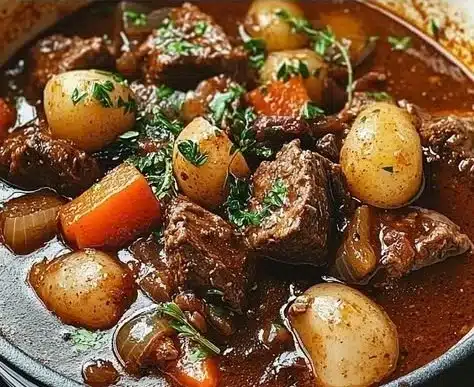
The aroma of Classic Beef Stew wafted through my grandmother’s cozy kitchen, where the sun would filter through the plaid curtains and dance across the worn wooden table. I can still remember the first time I sank my spoon into that rich, savory goodness, the kind that warms not just the belly but also the spirit. There was something magical about how the beef simmered low and slow, breaking down tenderly while soaking up the flavors of garlic, rosemary, and thyme. I would watch, entranced, as she stirred in the carrots and potatoes, infusing the kitchen with an earthy scent that felt like a warm embrace, cozying up to the soul.
As a child, I learned that cooking was about more than just feeding a crowd—it was about weaving love and memories into every dish. The Classic Beef Stew became our family’s go-to on chilly evenings, a bowl of warmth that brought us all together around the table. My grandmother’s joyful laughter mixed with the bubbling stew created a symphony of comfort in our home. She would tell stories while we waited, making the anticipation almost palpable. I still carry that sense of love and joy in my heart whenever I prepare it today, hoping to recreate those cherished moments for others. Today, as I share my own take on this beloved recipe, I invite you to stir that same magic into your kitchen.
Flavor and Popularity
The Unique Flavor Profile of Classic Beef Stew
Classic Beef Stew is a beloved dish that offers a harmonious blend of savory and earthy flavors, each ingredient contributing to a symphony of taste. The chunks of beef, seared to a perfect brown, provide a hearty foundation that’s rich in umami. As the meat cooks slowly in the broth, it releases its juices, creating a deep richness that’s truly irresistible. The herbs—like fragrant rosemary and thyme—along with a touch of garlic and onions, elevate the dish, infusing it with aromatic delights that linger in the air. When you bite into a tender piece of beef alongside the buttery potatoes and sweet carrots, you partake in a feast of textures and tastes that reflect the heart and soul of home cooking.
Not only does this classic dish entice with its complex flavor profile, but its popularity also stems from its versatility. It’s an adaptable canvas for personal touches, whether you prefer to add in peas or switch up the herbs based on what you have on hand. The warmth radiating from a pot of beef stew is universally appealing, making it a favorite among families and at gatherings. Its ability to nurture is undeniable, which is why it finds a special place in kitchens across many households.
Why This Recipe Is a Family Favorite and Crowd-Pleaser
The reason Classic Beef Stew has earned its title as a family favorite extends far beyond its deliciousness. It brings people together, acting as a catalyst for connection and conversation. The communal act of sharing a meal becomes an opportunity for laughter, stories, and reminiscence. Whether I serve it at a birthday celebration or a simple weeknight dinner, this dish sparks joy and warmth in every corner of the room.
Additionally, Classic Beef Stew is welcoming of diverse tastes, appealing to both kids and adults. Its deliciously tender beef satisfies meat lovers, while the flavorful broth and vegetables make it comforting for anyone seeking warmth on a cold day. This dish exudes a nurturing quality, making it an ideal centerpiece for family meals or a delightful offering to friends visiting for the holidays. No matter the occasion, there’s something undeniably special about gathering around a steaming pot of Classic Beef Stew, knowing it carries the love and memories of shared meals in the hearts of all who partake.
Ingredients and Preparation
Essential Ingredients and Possible Substitutions
To create the perfect Classic Beef Stew, you’ll need a handful of essential ingredients. Here’s what you’ll want to gather:
- Beef (chuck or round): Use a well-marbled cut for tenderness as it cooks low and slow. No need to break the bank; choose cuts that become succulent after simmering.
- Onions: Yellow onions are best for their sweetness, but you could also use shallots or even green onions for a different flavor profile.
- Carrots: Their natural sweetness contrasts beautifully with the savory elements, so grab fresh, vibrant carrots for a colorful dish.
- Potatoes: Russet or Yukon Gold potatoes yield a creamy, buttery texture, and they soak up all the stew’s delightful flavors.
- Garlic: Fresh garlic imparts a robust taste, but if you’re in a pinch, feel free to use garlic powder or granules.
- Beef broth: Homemade is always best if you have the time, but store-bought options work wonderfully. Look for low-sodium varieties to control the salt levels.
- Fresh herbs: Rosemary and thyme are traditional, but don’t hesitate to experiment with parsley or bay leaves for added aroma.
- Tomato paste: This adds depth and a hint of sweetness that balances the hearty nature of the dish.
- Olive oil: A solid base for browning the meat and aromatic vegetables.
- Salt and pepper: The perfect finishing touch to enhance all the flavors.
If you need substitutions, here are a few options! Instead of beef, you could use lamb pieces for a twist on this classic dish or go vegetarian with root vegetables and mushrooms as the star ingredients. If you don’t have fresh herbs on hand, dried herbs will work too, though you’ll want to use less since they have a more concentrated flavor.
Step-by-Step Recipe Instructions with Tips
Sear the Meat: Start by cutting your beef into 1-2 inch chunks. Season generously with salt and pepper. Heat olive oil in a large pot over medium-high heat and sear the beef in batches until it’s golden brown on all sides. This caramelization will intensify the flavor of your stew. Remember not to overcrowd the pot; give each piece room to develop its rich brown color.
Sauté Aromatics: Once the meat is browned, remove it from the pot and set aside. Lower the heat to medium and add onions and garlic to the pot, sautéing until they soften and become fragrant. Be sure to scrape up the brown bits left from the beef as you stir—the flavors captured there are pure gold.
Build Flavor: Stir in tomato paste and cook for a minute, allowing it to caramelize slightly. Then, return the beef to the pot, along with the chopped carrots and potatoes. Pour in the beef broth, adding enough liquid to cover the meat and vegetables.
Add Herbs: Tuck in your fresh herbs—rosemary and thyme—before bringing the stew to a boil. Once boiling, reduce the heat to low, cover, and let it simmer gently. This is where all those flavors meld harmoniously, creating a comforting dish. Allow it to simmer for 1.5 to 2 hours, or until the beef is wonderfully tender.
Final Touches: If your stew looks too thin after cooking, you can thicken it by whisking in a mixture of flour and water or cornstarch and water. Adjust the seasoning with salt and pepper to taste for a dish that sings in your mouth.
Cooking Techniques and Tips
How to Cook Classic Beef Stew Perfectly
To achieve the most savory Classic Beef Stew, follow these essential cooking tips:
Patience is Key: Allowing the stew to simmer on low heat develops deep, rich flavors. Resist the urge to rush the process. Good things come to those who wait, especially in the kitchen!
Quality Ingredients Matter: Using high-quality beef and fresh vegetables enhances the overall flavor and makes a notable difference in the final dish. Think about the satisfaction that comes from each tender bite!
Experiment with Additions: Don’t be afraid to get creative! Add mushrooms for depth or a splash of red wine for extra richness if you’re feeling adventurous.
Common Mistakes to Avoid
Cooking Classic Beef Stew might seem straightforward, but a few common pitfalls can turn it into a less than stellar experience:
Skipping the Sear: Searing the meat adds layers of flavor that are important for a satisfying stew. Don’t cut corners—those caramelized bits are key!
Rushing the Cooking Process: Cooking too quickly at a high temperature can lead to tough beef and poorly developed flavors. Take your time to really let everything come together.
Neglecting Seasoning: Begin with a good amount of salt and pepper, but do taste and adjust throughout the cooking process. You can always add more, but you can’t take it out!
Health Benefits and Serving Suggestions
Nutritional Value of Classic Beef Stew
Classic Beef Stew isn’t just comforting; it’s also nutritious! Packed with protein from the beef and a healthy serving of vegetables, this dish presents a wholesome meal. The carrots provide a good dose of beta-carotene, which is excellent for eye health, and the potatoes offer complex carbohydrates that help sustain energy. The rich broth is often loaded with vitamins and minerals extracted from the vegetables, contributing to an overall healthy meal that can warm both the body and the spirit.
While this stew is hearty, it’s balanced, making it a suitable option for various dietary preferences. You can easily modify the recipe by adding more veggies or adjusting the meat-to-vegetable ratio to lean toward a lighter dish.
Best Ways to Serve and Pair This Dish
There’s nothing like enjoying Classic Beef Stew with a side of crusty bread for dipping. Focaccia or a hearty sourdough can soak up the rich broth beautifully. Additionally, a fresh garden salad revitalizes the palate and adds a refreshing contrast to the stew’s comforting warmth.
For beverages, consider pairing your meal with a glass of full-bodied red wine, which enhances the flavors of the beef, or perhaps a light-bodied beer for the perfect combination. If you want to keep it non-alcoholic, try a sparkling apple cider for a delightful contrast.
FAQ Section
What type of mushrooms are best for Classic Beef Stew?
Cremini mushrooms are a fantastic choice for Classic Beef Stew as they add earthiness and depth. However, you can also use button mushrooms, shiitake, or a mix to give your stew added flavor and variety.
Can I use dried garlic instead of fresh?
Yes, you can use dried garlic; however, I recommend using less than you would fresh since dried garlic is more concentrated. Aim for about one-eighth of a teaspoon for each clove you would have used to maintain balanced flavors.
How do I store leftover Classic Beef Stew?
Allow the stew to cool completely before transferring it to an airtight container. Store it in the refrigerator for up to three days or allow it to come to room temperature before freezing it. It can last in the freezer for up to three months.
Can I freeze Classic Beef Stew?
Absolutely! Classic Beef Stew freezes beautifully. Just be sure to leave some space in your container for expansion once it freezes. When you’re ready to enjoy it, simply thaw it in the refrigerator overnight and reheat on the stove over low heat.
Conclusion
If you’re like me, Classic Beef Stew signifies warmth, love, and shared moments around the dinner table. Each rich spoonful tells a story, not just of flavors, but of cherished memories that bring us together. So, gather your ingredients and give this recipe a whirl. Trust me, you’ll want to make this again and again, creating your own traditions and memories that will last a lifetime. Allow the comforting flavors to wrap around you just as my grandmother’s kitchen once enveloped me. Happy cooking!
Print
Classic Beef Stew
- Total Time: 135 minutes
- Yield: 6 servings 1x
- Diet: None
Description
A hearty and comforting Classic Beef Stew, simmered low and slow with tender beef, carrots, and potatoes infused with savory herbs.
Ingredients
- 2 lbs beef (chuck or round), cut into 1-2 inch chunks
- 2 onions, diced
- 4 carrots, chopped
- 4 potatoes, peeled and diced
- 4 cloves garlic, minced
- 6 cups beef broth
- 2 tbsp tomato paste
- 2 tbsp olive oil
- 2 sprigs fresh rosemary
- 2 sprigs fresh thyme
- Salt and pepper to taste
Instructions
- Season the beef chunks generously with salt and pepper.
- Heat olive oil in a large pot over medium-high heat and sear the beef in batches until golden brown on all sides. Remove from pot.
- Add onions and garlic to the pot, sautéing until softened. Scrape up brown bits from the bottom.
- Stir in tomato paste and cook for one minute. Return beef to the pot with carrots and potatoes.
- Pour in beef broth, adding enough to cover all ingredients. Bring to a boil.
- Reduce heat to low, add herbs, cover, and simmer for 1.5 to 2 hours until beef is tender. Adjust seasoning before serving.
Notes
For a thicker stew, whisk in a mixture of flour and water or cornstarch and water if the stew looks too thin after cooking. Allow flavors to develop by simmering slowly.
- Prep Time: 15 minutes
- Cook Time: 120 minutes
- Category: Main Course
- Method: Stewing
- Cuisine: American
Nutrition
- Serving Size: 1 serving
- Calories: 400
- Sugar: 6g
- Sodium: 500mg
- Fat: 15g
- Saturated Fat: 5g
- Unsaturated Fat: 8g
- Trans Fat: 0g
- Carbohydrates: 35g
- Fiber: 5g
- Protein: 30g
- Cholesterol: 80mg
Keywords: beef stew, comfort food, family recipe, hearty dish