There’s a distinct memory etched in my heart, like a savory melody, that spirals me back to a warm evening filled with laughter and delightful aromas. I recall the very first time I tasted Korean Fire Chicken; I was at a bustling food market with friends, surrounded by the buzz of conversation and the sizzle of ingredients on hot grills. The moment I caught a whiff of that smoky sweetness, blended with spicy hints that lingered in the air, I felt an irresistible pull. You see, Korean Fire Chicken is not just a dish; it’s an experience, a tapestry woven with cultural richness that invites you to explore its vibrant flavors.
Sitting under twinkling lights, I watched transfixed as the chef expertly tossed chunks of chicken in a fiery red sauce, the glistening bits clinging together in a glorious embrace. It was love at first bite. The heat danced on my palate, and the sweetness wrapped around my senses like a warm hug. I can still feel the heat radiating from that plate, mingling with the laughter of my friends, and inspiring a curiosity that would soon lead me to recreate this very dish in my own kitchen.
Fast forward to now, every time I prepare Korean Fire Chicken, I can’t help but connect to that joyful moment. Each splash of sauce and sprinkle of sesame seeds brings me closer to those memories, bridging the gap between our tables and the bustling streets of Seoul. Cooking has always been about sharing love, tradition, and joy for me, and this dish, with its fiery essence, embodies all that and more.
Flavor and Popularity
Korean Fire Chicken captivates not just eaters but also those curious about its rich history and bold flavors. As a Southern cook with a zest for diverse cuisines, I’ve found this dish to be especially charming.
The Unique Flavor Profile of Korean Fire Chicken
The flavor profile of Korean Fire Chicken is a harmonious juxtaposition of heat and sweetness. The key to its charm lies within the gochujang, a Korean chili paste crafted from red chili powder, glutinous rice, fermented soybeans, and salt. This paste brings an earthy depth, offering a mild sweetness that plays wonderfully against the spicy punch. When paired with garlic and ginger, the combination transforms the dish into a tantalizing experience.
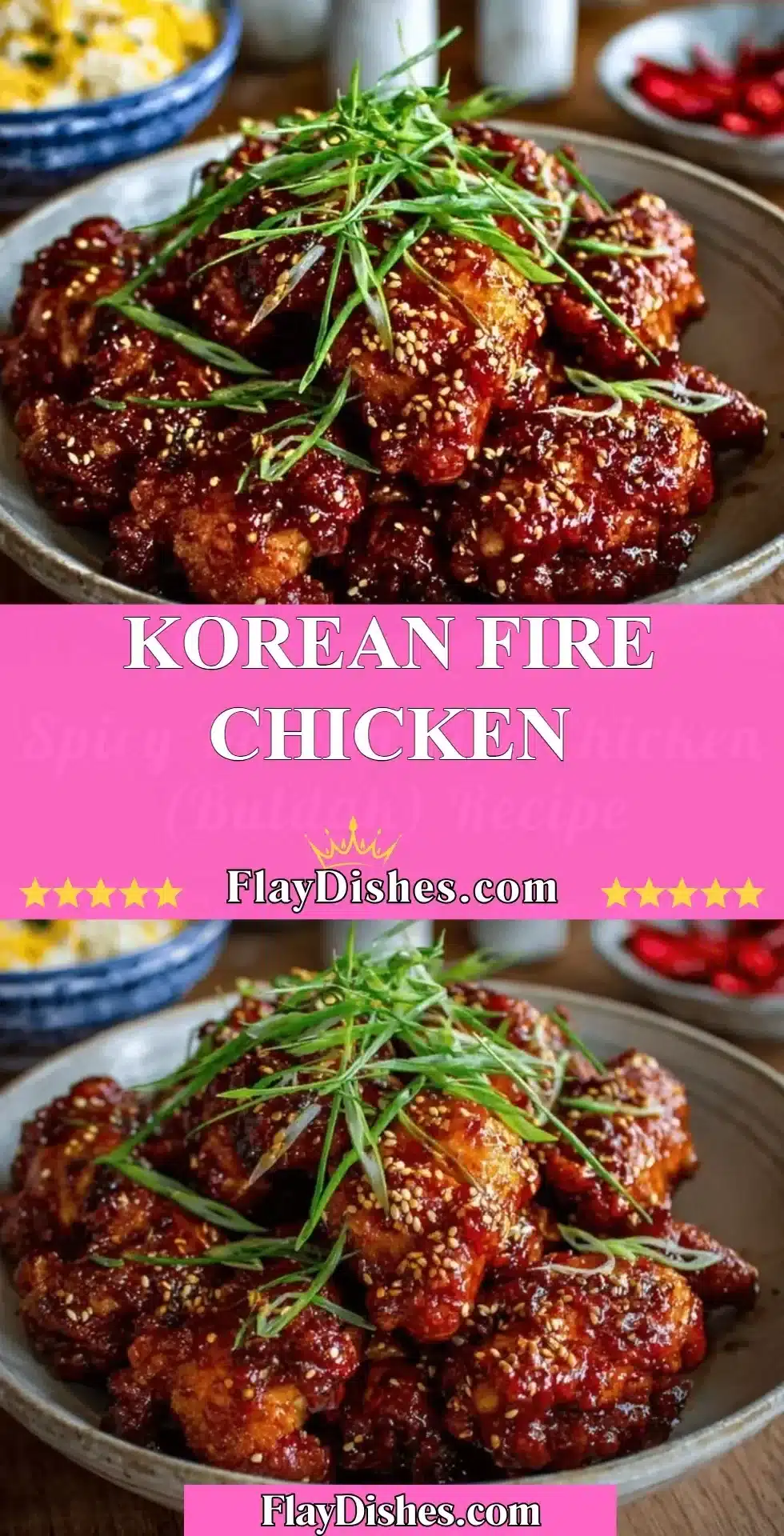
Every component harmonizes beautifully: the sautéed chicken piles high in a sticky, glossy sauce, each bite bursting with umami. Just when you think it couldn’t get better, fresh scallions and sesame seeds provide a crisp, earthy crunch that takes the dish to entirely new heights.
Why This Recipe Is a Family Favorite and Crowd-Pleaser
Korean Fire Chicken has a remarkable ability to draw people together. My family has always loved it for special occasions, encouraging a sense of community around the dinner table. Whether served at a warm family gathering or a festive party, this dish has a unique way of melting hearts and igniting conversations.
When my daughters come home with friends, nothing brings them together like the smell of Korean Fire Chicken wafting through the air. With everyone gathered, I find joy in witnessing them reminisce, share stories, and bond over a meal that offers not just sustenance but also a sense of belonging and warmth. It reinforces my belief that food is a love language that transcends generations, and this dish does it beautifully.
Ingredients and Preparation
Every household has its staples, and when it comes to Korean Fire Chicken, you’ll want to be prepared with some essential ingredients to create that mouthwatering burst of flavor.
Essential Ingredients and Possible Substitutions
To embark on this delicious journey, gather the following:
- Chicken (breast or thighs): I prefer boneless chicken thighs for their juiciness, but you can choose breast if that’s what you have on hand.
- Gochujang: This spicy, fermented chili paste is non-negotiable. If you must make a substitution, a combination of red chili paste and a touch of honey could work in a pinch.
- Garlic: Fresh garlic elevates any dish, with its fragrant essence penetrating through each layer of flavor. While fresh is best, you can use dried garlic in emergencies.
- Soy Sauce: This salty, umami-packed sauce brings depth; low-sodium versions can be a healthier option if you prefer.
- Sesame Oil: This nutty oil adds richness, offering a delicate whisper of flavor that grabs hold of the overall taste.
- Honey or Brown Sugar: To balance the heat, these sweeteners do the trick splendidly.
- Vegetables (like bell peppers, onions, and carrots): Adding sautéed vegetables not only enhances the flavor but also augments the nutrient content.
Feel free to tweak these ingredients based on your preferences. If you’re vegan or vegetarian, consider substituting tofu or tempeh for the chicken. Trust me; the gochujang flavor will shine through!
Step-by-Step Recipe Instructions with Tips
Marinate the Chicken:
In a mixing bowl, toss your chicken pieces with gochujang, soy sauce, minced garlic, sesame oil, and honey. Let the marinade work its magic for at least 30 minutes—this step is essential for flavor development. I often do it in the morning, letting the chicken sit in the fridge until dinnertime.Sauté the Chicken:
Heat a tablespoon of oil in a large skillet over medium-high heat. Once hot, add the marinated chicken. Cook until golden brown, turning occasionally to ensure even cooking, which takes around 5-7 minutes.Add Vegetables:
Toss in your choice of vegetables during the final few minutes of cooking. This not only adds a pop of color but also vital nutrients.Make the Sauce:
Pour any leftover marinade into the pan, letting it thicken slightly for a few minutes. It should become beautifully glossy and sticky.Plate and Garnish:
Serve Korean Fire Chicken over steamed rice or noodles, and sprinkle with scallions and sesame seeds. Their crunch balances the dish, creating an unforgettable bite.
With each careful step, you’re not just cooking, but embracing the heart of Korean cuisine.
Cooking Techniques and Tips
Cooking Korean Fire Chicken is about embracing the technique and allowing flavors to meld beautifully. Here, I share tips for achieving perfection in each bite.
How to Cook Korean Fire Chicken Perfectly
- Temperature Matters: Always ensure your skillet is hot enough to sear the chicken immediately upon contact. This will help lock in juices and flavor.
- Don’t Rush the Marinade: The longer you let the chicken marinate, the more pronounced the flavors will become. Even a couple of hours can transform your dish!
- Balance Spices: If the sauce is too spicy for your taste, balance it with additional honey or a splash of coconut milk.
Common Mistakes to Avoid
- Overcrowding the Pan: Give the chicken space in the skillet. When you overcrowd, it steams rather than browns.
- Skipping the Sauce: Many people miss the importance of crafting a delectable sauce at the end. Don’t skip this step—let the marinade reduce to a sauce-like consistency for a rich finish.
- Neglecting Vegetable Additions: Vegetables not only enhance flavor but also contribute beautiful color and nutrients. Don’t skip on this—creative additions like broccoli or mushrooms can redefine the dish!
Health Benefits and Serving Suggestions
You can relish in Korean Fire Chicken without the guilt. It’s both nutritious and exciting!
Nutritional Value of Korean Fire Chicken
This dish primarily made of chicken is high in protein, essential for muscle growth and repair. The addition of vegetables boosts vitamin intake while the garlic and gochujang provide a slew of health benefits, including anti-inflammatory properties. The use of honey contributes antioxidants!
Best Ways to Serve and Pair This Dish
Korean Fire Chicken shines as a main dish, served atop fluffy jasmine rice or paired with crispy lettuce wraps. A side of kimchi offers a zesty tang, expanding the flavor profile while introducing beneficial probiotics. Whether it’s sharing a meal with loved ones or enjoying it during a quiet evening, there’s a pleasure that fills the air with each serving.
FAQ Section
What type of mushrooms are best for Korean Fire Chicken?
I love using shiitake mushrooms for their earthy flavor, but you can also use button or portobello mushrooms depending on your preference. Just remember, whichever you choose, sautéing them will infuse the dish with a delightful umami flavor.
Can I use dried garlic instead of fresh?
While fresh garlic provides a brighter flavor, you can certainly use dried garlic in a pinch. Just keep in mind that the flavor intensity varies, so start with a smaller amount and adjust to your taste.
How do I store leftover Korean Fire Chicken?
Store any leftovers in an airtight container in the fridge. It will last about 3-4 days.
Can I freeze Korean Fire Chicken?
Absolutely! Just allow it to cool completely before transferring it to a freezer-safe container. It will maintain its flavor for up to three months. Just reheat it patiently for a quick, flavorful meal!
As I sit here, reflecting on my time in the kitchen crafting Korean Fire Chicken, I feel a warmth that comes from knowing I’m sharing something special with the people I love. If you’re like me, eager to explore flavors from around the world while nourishing those close to you, give this recipe a try. There’s something comforting about creating a dish that is as vibrant as it is delicious. Trust me, you’ll want to make this again and again.
Print
Korean Fire Chicken
- Total Time: 45 minutes
- Yield: 4 servings 1x
- Diet: Gluten-Free
Description
A spicy and sweet chicken dish marinated in gochujang and sautéed with vegetables, perfect for gatherings and family meals.
Ingredients
- 1 pound boneless chicken thighs
- 3 tablespoons gochujang
- 2 cloves garlic, minced
- 2 tablespoons soy sauce
- 1 tablespoon sesame oil
- 1 tablespoon honey
- 1 cup sautéed vegetables (bell peppers, onions, carrots)
- 1 green onion, sliced for garnish
- 1 tablespoon sesame seeds for garnish
Instructions
- In a mixing bowl, toss chicken pieces with gochujang, soy sauce, minced garlic, sesame oil, and honey. Marinate for at least 30 minutes.
- Heat oil in a skillet over medium-high heat. Add marinated chicken and cook until golden brown, about 5-7 minutes.
- Add sautéed vegetables during the final cooking minutes.
- Pour any leftover marinade into the pan and let it thicken slightly.
- Serve over steamed rice or noodles, garnished with green onion and sesame seeds.
Notes
For a vegetarian version, substitute chicken with tofu or tempeh. Adjust the heat levels by varying the amount of gochujang.
- Prep Time: 30 minutes
- Cook Time: 15 minutes
- Category: Main Course
- Method: Sautéing
- Cuisine: Korean
Nutrition
- Serving Size: 1 serving
- Calories: 400
- Sugar: 8g
- Sodium: 600mg
- Fat: 16g
- Saturated Fat: 2g
- Unsaturated Fat: 10g
- Trans Fat: 0g
- Carbohydrates: 32g
- Fiber: 3g
- Protein: 25g
- Cholesterol: 90mg
Keywords: Korean Fire Chicken, Gochujang, Spicy Chicken, Korean Cuisine, Family Recipe